

Presentation
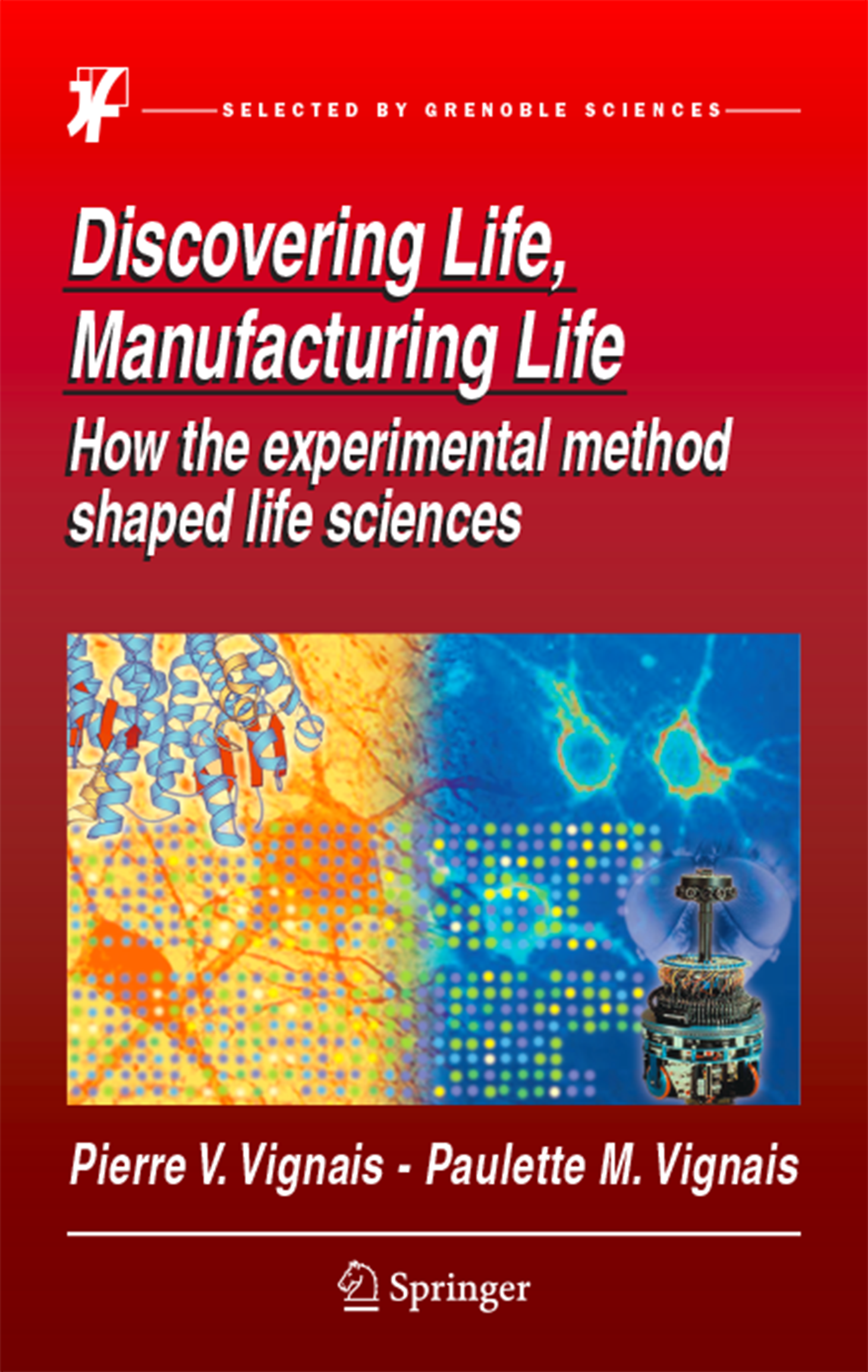
This book tells the story of how thinkers, over time, have dared to explore using experimental devices and how the experimental method established itself and took a predominant role in the life sciences.
While life sciences continue to advance and knowledge becomes more widespread and accessible, philosophers now focus on problems of ethics particularly with respect to the reproductive functions that contemporary biology is able to manipulate and modify.
Looking at the stunning progress made by scientific thought over the last five centuries we might ask ourselves what were the triggering factors that lead to the experimental method. How did this logical and objective approach to the exploration of various enigmas in nature arise and spread at a particular moment in time in the western world? Was there an influence from the social, religious or political context? Was the energy of a few individuals sufficient to initiate such a revolution?
The authors of this book take us on journey of the mind, from the ancient roots of scientific rationality to today’s irresistible trend in genetic manipulation, particularly focused on human beings. Inevitably this will lead the reader to view the way in which science is done today under a new light. A fascinating discussion, based on concrete examples and experiments, provides food for thought, not only with respect to the experimental method itself, but also regarding the organization of science as it exists today and how it is perceived.
While life sciences continue to advance and knowledge becomes more widespread and accessible, philosophers now focus on problems of ethics particularly with respect to the reproductive functions that contemporary biology is able to manipulate and modify.
Looking at the stunning progress made by scientific thought over the last five centuries we might ask ourselves what were the triggering factors that lead to the experimental method. How did this logical and objective approach to the exploration of various enigmas in nature arise and spread at a particular moment in time in the western world? Was there an influence from the social, religious or political context? Was the energy of a few individuals sufficient to initiate such a revolution?
The authors of this book take us on journey of the mind, from the ancient roots of scientific rationality to today’s irresistible trend in genetic manipulation, particularly focused on human beings. Inevitably this will lead the reader to view the way in which science is done today under a new light. A fascinating discussion, based on concrete examples and experiments, provides food for thought, not only with respect to the experimental method itself, but also regarding the organization of science as it exists today and how it is perceived.
Author(s)
Pierre V. Vignais, a science doctor and a doctor of medicine, was awarded a scholarship of the Fondation Roux at the Pasteur Institute of Paris. Professor emeritus of Biochemistry of the medical college of the University Joseph Fourier and director of a URA-CNRS at the CEA (French Atomic Energy Commission), he received the CNRS Silver Medal and the Grand Prix de l'Académie des Sciences. He died, aged 80, in September 2006.
Paulette M. Vignais, his wife, received her diploma in chemical engineering from the Ecole Nationale Supérieure de Chimie de Paris (ENSCP) and obtained her Ph.D. in biochemistry from the University of Paris. She recently retired from a position of Emeritus director of Research at the CNRS where she directed a CNRS-CEA Unit at the CEA.
Paulette M. Vignais, his wife, received her diploma in chemical engineering from the Ecole Nationale Supérieure de Chimie de Paris (ENSCP) and obtained her Ph.D. in biochemistry from the University of Paris. She recently retired from a position of Emeritus director of Research at the CNRS where she directed a CNRS-CEA Unit at the CEA.
Features
- Publisher(s):
- Springer
- Date of publication:
- February 1, 2010
- Number of pages:
- 418 p. pages
- Type of illustrations:
- 106 ill. (b/w)
- Language(s):
- english
- Original title:
- Science expérimentale et connaissance du vivant
- Original publisher:
- EDP Sciences
- Date of first publication:
- March 1, 2006
- Original Language:
- french